

What Agile Development Means
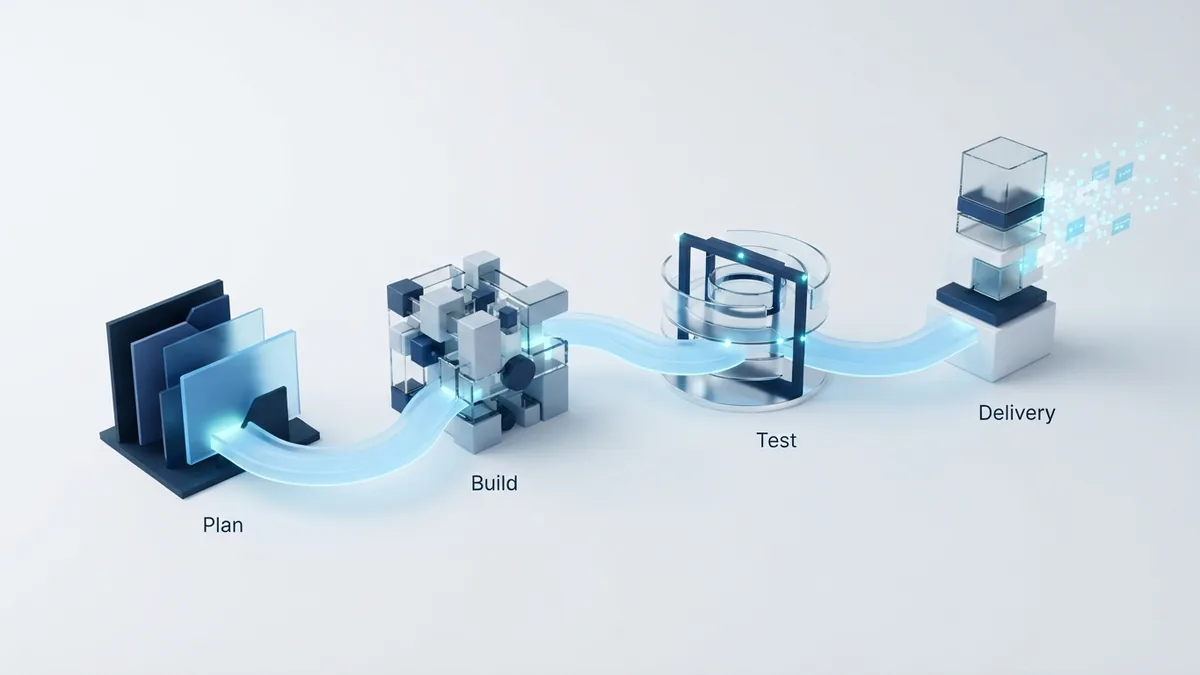
Agile development is an iterative way to manage projects and build software. Teams plan work in small steps, create useful pieces, test them, and learn from feedback. Rather than wait until the end to show a finished product, they deliver working software often.
These agile development phases are not a fixed, one-way sequence. A team may revisit its plan after a test, customer review, or shift in business needs. The exact process depends on the project, but planning, execution, testing, and delivery are common parts of each cycle.
Agile rests on close teamwork and a steady response to change. The Agile Manifesto and its principles stress customer collaboration, working software, and adapting plans as teams learn. In practice, that means sharing progress often and using feedback to guide the next step.
The Main Phases of Agile Development
Agile software development phases repeat in short cycles, often called iterations or sprints. A sprint in Scrum commonly lasts one to four weeks. Teams use each cycle to move a small set of useful changes from an idea toward release.
First, the team plans. It reviews the product backlog, which is a ranked list of work, then chooses a realistic goal. Next, developers build the selected features and share progress with the team. Short daily check-ins can help surface blockers before they slow the work.
Testing takes place throughout the cycle, not just at its end. Developers and testers check that features work, fit the need, and do not break existing functions. The team then reviews the result with stakeholders, gathers feedback, and decides what to improve or build next.
Delivery may happen at the end of a cycle or more often. Some teams release each change once it passes checks; others bundle work for a planned launch. A small app update, for example, might add one payment option, test it, and release it before work begins on a larger feature.
- Plan: Agree on a goal and choose the next high-value tasks.
- Build: Create a working piece of the product.
- Test: Check quality, fit, and the impact on existing features.
- Review and deliver: Share the work, gather feedback, and release when ready.
- Learn: Use results to shape the next cycle.
These steps give teams a useful rhythm, not a rigid rulebook. In mobile app development phases, for instance, a team can test a new sign-in flow with users, fix confusing steps, then move on to another feature.
Scrum, Kanban, and Other Agile Methods
Scrum and Kanban are widely used ways to put agile ideas into practice. Scrum gives teams set roles, events, and short sprints. At the start of a sprint, the team agrees on a goal. At the end, it reviews the work and looks for ways to improve how it works together.
Kanban focuses on the flow of work. Teams place tasks on a board and move them through stages such as ready, in progress, and done. They limit how many tasks can be active at once. This makes delays easier to spot and helps the team finish work before starting more.
Neither method fits every project in the same way. Scrum can suit teams that benefit from a regular planning and review cycle. Kanban can work well when requests arrive steadily and priorities shift often. Some teams combine elements, such as using a Kanban board within Scrum.
Choose a method based on the work and the team, not on its name. A small product team may prefer Scrum’s regular sprint goals. A support team handling incoming fixes may need Kanban’s flexible flow. In both cases, the aim is to make progress visible and respond to feedback.
Why Teams Use Agile Phases

Short cycles let teams deliver useful work sooner. A business does not have to wait for a large project to end before seeing results. Early releases can test an idea with real users, which helps the team spend time on features that matter.
Agile also makes change easier to handle. If customer needs shift, the team can reorder future work instead of rewriting a fixed plan for the whole project. This does not mean every request must be added at once. The team still weighs value, cost, risk, and time.
Frequent reviews can improve team coordination. Developers, testers, designers, and business leads see the same progress and can raise concerns sooner. Clear goals also help each person understand how their work supports the product.
For example, a team building a booking app might release search first, then add saved trips after user feedback. This lets the team check whether search works well before expanding the product. Faster learning is often as valuable as faster release.
Common Challenges and How to Address Them
Changing requirements can pull a team in too many directions. New ideas may be useful, but constant mid-cycle changes can leave work unfinished. Keep a ranked backlog, and agree on how urgent changes enter the current cycle.
Team coordination can also be hard, especially across roles or time zones. Work may stall when ownership is unclear or decisions wait on one person. Set clear task owners, share brief updates, and record decisions where the whole team can find them.
Another risk is treating agile as a set of meetings rather than a way to learn and deliver. A team can hold every ceremony and still miss customer needs. Review actual outcomes, such as working features, defects, and user feedback, instead of counting meetings or tasks alone.
Testing can become a bottleneck when it is saved for the end. Include checks throughout development and automate repeatable tests where it makes sense. This gives the team faster signals and lowers the chance that a late defect will delay release.
Best Practices for Agile Implementation
Start with a clear product goal and a small first release. A focused goal helps the team choose work and say no to distractions. Break large features into pieces that can be built, tested, and reviewed within a short cycle.
Keep communication frequent and useful. Hold short check-ins to surface blockers, then use planning and review sessions for deeper choices. Share progress in plain terms so customers and business partners can respond without needing a technical background.
Make customer feedback part of the work, not a final sign-off. Show a working version early, ask specific questions, and note what users do as well as what they say. Use that evidence to adjust the backlog and shape the next iteration.
Finally, improve the process a little at a time. After each cycle, ask what slowed the team and what helped it deliver. Pick one change to try in the next cycle, such as smaller tasks or earlier testing. Agile works best when teams keep learning while they build.
Frequently asked questions
What are the main phases of agile development?
Most teams plan, build, test, review, and deliver in repeating cycles. They use feedback from each cycle to shape the next one.
How long does an agile development cycle last?
A Scrum sprint often lasts one to four weeks. Kanban teams may deliver work continuously, without fixed sprint dates.
What is the difference between Scrum and Kanban?
Scrum organizes work into set-length sprints with regular planning and review. Kanban tracks ongoing work and limits how many tasks are active at once.
Does agile mean project requirements can change at any time?
Agile allows teams to adapt as they learn, but changes still need review. Teams can rank new work and decide whether it belongs in the current cycle or a later one.
When does testing happen in agile development?
Testing happens throughout each cycle, not only before release. Early checks help teams find issues while changes are still easier to make.