
What a user story means in Agile
What is a user story in Agile? It is a short description of a feature from a user's point of view. It says who needs something, what they want, and why it matters. Teams use stories to guide discussion, planning, and delivery.
So, what is an Agile user story in day-to-day work? It is a shared way to describe a user need, not a full technical plan. For example, a returning shopper may want to save a delivery address. The reason could be faster checkout on future orders.
Stories often sit in a product backlog, where a team reviews and ranks upcoming work. Product owners, designers, developers, and testers can all help shape them. Each role brings a different view of the need and the best result.
- Describe a need from the user's view
- Explain the benefit behind the requested action
- Leave room to discuss the right solution
User story format and structure
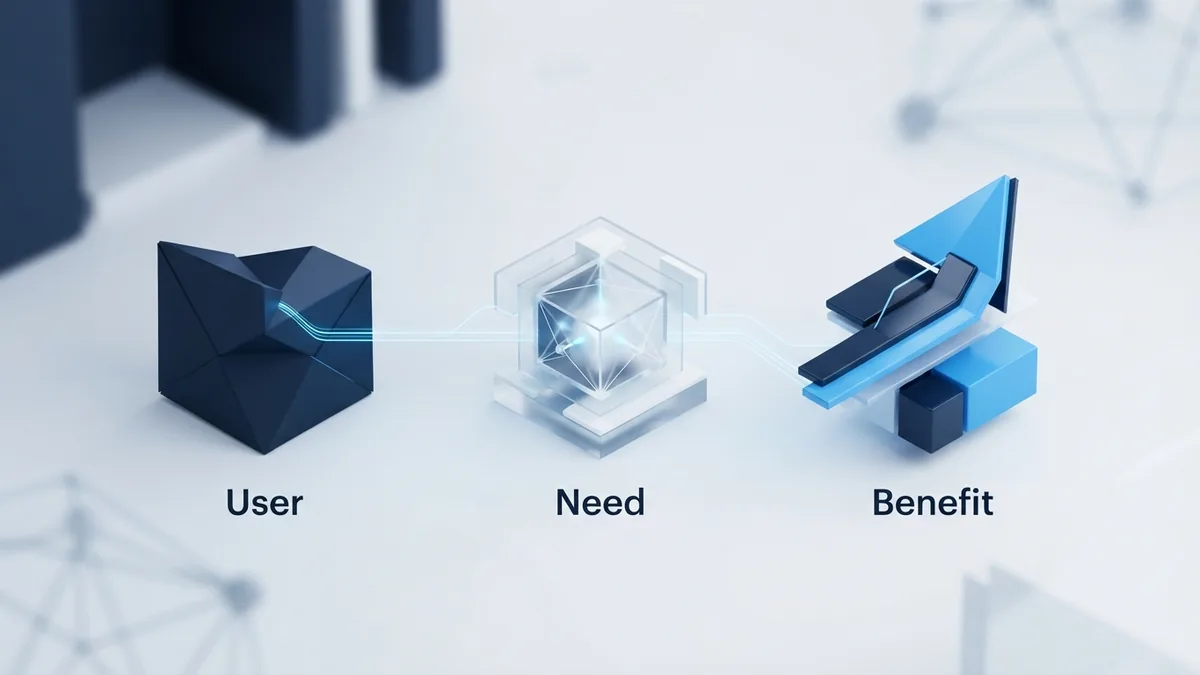
The recommended user story format in Agile is: “As a [user type], I want [an action] so that [a benefit].” The user type names who needs the feature. The action states what they want to do. The benefit explains why that action has value.
For example: “As a returning customer, I want to save my delivery address so that checkout takes less time.” Use a user type that reflects real needs. A user persona or customer research can help. Avoid labels so broad that they hide important differences.
This format is a prompt for discussion, not a strict rule. A team may add acceptance criteria to define what must be true when the work is done. Keep each check focused on a result the user can see.
- User: Who needs the outcome?
- Need: What should they be able to do?
- Benefit: Why is the result useful?

Why teams use stories in Agile
User stories help teams focus on user needs rather than feature lists. A feature name may say what to build, but not who it helps. A story gives the team a reason to compare design and build choices.
Writing stories also brings different roles into the same discussion. A product owner can explain the need and its place in the backlog. Developers can raise build concerns. Testers can ask how the team will check the result.
Good stories are small enough to finish within a sprint. A story that covers many user types, screens, or rules may be hard to plan. Split it by user outcome or task, rather than by technical layer alone.
A story does not need every detail before work starts. The team can refine it as questions arise. That keeps the goal clear without locking the team into a fixed solution too soon.

Examples of strong user stories
These examples show how a clear user, action, and benefit work together. The benefit helps the team judge whether its solution meets the need. It also gives testers a useful place to start.
- As a first-time buyer, I want to see delivery costs before checkout so that I can judge the full price.
- As a shop manager, I want to pause an out-of-stock item so that buyers cannot order it by mistake.
- As a support agent, I want to view a customer's recent orders so that I can answer questions faster.
What is a good user story in Agile? It names a real user, describes a clear need, and gives a useful reason. “As a user, I want a better account page so that it is improved” misses those marks. The user is vague, and “better” cannot be checked.
Acceptance criteria can make the first example easier to test. For instance, delivery costs appear before payment and change when the address changes. The order summary should show the final cost, too. These checks describe outcomes without dictating how to build them.

How to write an effective Agile user story
How to write a user story in Agile starts with a user need, not a proposed tool or screen. Ask product owners, team members, and users what problem needs solving. Then shape the story together during backlog refinement or sprint planning.
How to write an Agile user story well also means checking its size and clarity. A story should be easy to discuss and small enough for the team to complete. If its benefit is hard to explain, learn more before adding it to a sprint.
- Name the user. Use research, support requests, or a useful persona to identify who needs the outcome.
- State the need. Describe an action the user wants, without naming a technical fix.
- Explain the benefit. Say what improves when the need is met.
- Agree on checks. Write a few criteria that show the expected result.
- Check the size. Split work that cannot fit the team's sprint.
To learn how to write a good user story in Agile, read it aloud with the team. Can everyone name the user and the value? Can the team tell when the result works? If not, refine the story before estimating it.
In Agile testing, a user story gives testers the user goal and the reason behind it. What is a user story in Agile testing? It is the same user-focused description used by the whole team, paired with test checks that confirm the outcome. Criteria should cover key paths and likely edge cases.
User story mapping and the user journey
What is story mapping in Agile? It is a way to lay out the steps a user takes to reach a goal. The team groups related tasks under each step, then ranks work by value and need. This view makes gaps and dependencies easier to spot.
What is user story mapping in Agile in practice? Start with a user goal, such as placing an order. Add the main steps, like finding an item, checking delivery, and paying. Then add stories beneath each step, such as seeing stock or changing an address.
A map helps a team plan a useful first release. It can show the smallest set of stories that lets a user complete the main journey. Later work can add helpful extras. The map supports prioritization, but it does not replace backlog refinement.
Keep the map tied to real user tasks. If the team adds features without a clear place in the journey, ask what need they serve. A focused map helps the team build a coherent product, one outcome at a time.
Frequently asked questions
What is a user story in Agile?
It is a short description of a feature from a user's point of view. It states who needs something, what they want, and why it matters.
What format should an Agile user story use?
A common format is: “As a [user type], I want [an action] so that [a benefit].” Teams can add acceptance criteria to show what a finished result must do.
How do you write a good Agile user story?
Name a real user, describe a clear need, and explain its value. Review the story with the team and keep it small enough for a sprint.
What is user story mapping in Agile?
It is a visual way to arrange user tasks along a journey. Teams use the map to find gaps and choose which stories to build first.
How are user stories used in Agile testing?
The story explains the user's goal and benefit. Testers use its acceptance criteria to check that the delivered result meets the need.