
What Is Agile Software Development?
Agile software development is a way to build software in small, useful steps. Teams release working features often. They use feedback to guide the next step.
The agile software development methodology is an umbrella term. It covers Scrum, Kanban, and Extreme Programming, or XP.
Agile supports change throughout the work. Teams do not lock every detail before coding begins.
An agile software development sprint is a short work cycle. Most sprints last one to four weeks. Each cycle should produce a tested result.
- Choose a small piece of valuable work
- Plan the goal and success checks
- Design, build, and test the work
- Show the result to users or stakeholders
- Use feedback to shape the next cycle
This cycle lowers the risk of building the wrong product. It also gives leaders clear progress signals. Teams can spot weak ideas early.
Agility in software development means making sound changes at the right time. It does not mean changing plans without thought.
Principles That Guide Agile Development
Agile rests on practical ideas rather than strict rules. Teams value working software over long documents.
They welcome new needs, even late in development. The team then checks each change against value, cost, and risk.
Frequent delivery creates a steady learning loop. A team builds, measures, and learns.
Customer collaboration replaces guesswork with direct evidence. A short review can reveal problems that tests may miss.
Quality stays visible throughout the work. QA in software development should start early, not during the final week.
- Deliver useful software often
- Keep users and developers in close contact
- Trust skilled team members to solve problems
- Keep a steady pace of work
- Inspect results and improve the process
These ideas support adaptive planning. The team plans enough to act with care.
Agile software development focuses on value, feedback, quality, and quick learning. Those aims guide daily choices.
What Is the Agile Manifesto?
What is the manifesto for agile software development? It is a short statement of four core values.
It favors individuals and interactions over processes and tools. It favors working software over broad documents.
It also favors customer collaboration over contract talks. Finally, it favors responding to change over following a fixed plan.
These values do not reject tools, documents, contracts, or plans. They rank direct results and human judgment higher.
The official Agile Manifesto also lists twelve guiding principles.
Use those values as a check on meetings, reports, and approval steps. Each activity should help the team deliver better software.

Common Agile Frameworks and Methods
An agile development framework gives a team a pattern for organizing work. Each framework solves a different planning problem.
Scrum
Scrum uses fixed sprints and a ranked product backlog. The product owner orders work by value and risk.
The Scrum master helps remove barriers. Cross-functional team members design, build, and test the product.
Kanban
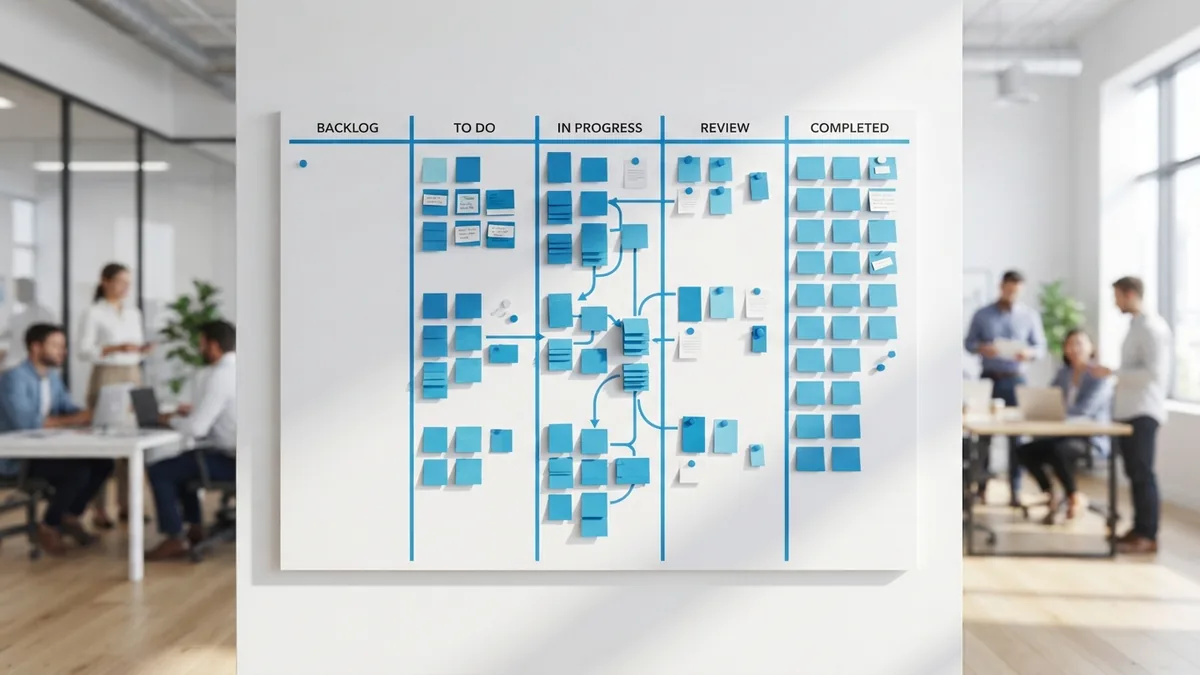
Kanban shows work on a visual board. Teams limit work in progress to reduce delays.
Kanban suits support work and products with shifting needs. It does not require fixed sprints.
Extreme Programming
Extreme Programming, or XP, focuses on strong engineering habits. These include pair work and test-first coding.
XP makes change safer. It also supports frequent code sharing and fast feedback.
Other approaches
Feature-Driven Development, or FDD, organizes work around small customer features. Lean agile software development seeks less waste and faster flow.
Some teams use a mix of methods. The best choice depends on risk, team skills, and work type.
| Method | Best fit | Main focus |
|---|---|---|
| Scrum | Product teams with planned cycles | Roles, sprints, and reviews |
| Kanban | Support work with shifting needs | Flow and work limits |
| XP | Teams facing high code risk | Tests and technical craft |
| FDD | Large feature-led products | Feature planning and delivery |
These are common types of agile development. Types of agile software development differ in pace, roles, and control.
Managing an Agile Project
Managing software development starts with a clear product goal. The product owner turns that goal into a ranked backlog.
Sprint planning selects work that fits the team’s capacity. The team then agrees on a useful sprint goal.
A strong agile software development team shares ownership. It does not pass work from one isolated role to another.
Key roles include the product owner, Scrum master, and cross-functional developers. Testers, designers, and domain experts may join them.
Teams can define responsibility with a RACI matrix for software development. RACI means responsible, accountable, consulted, and informed.
Clear roles help with an RFP for software development. Buyers can ask vendors who owns design, testing, delivery, and support.
- Set one clear outcome for each cycle
- Break large work into small user needs
- Define acceptance checks before coding
- Review progress with real stakeholders
- Track risks and remove blocked work
Artifacts in software development make work easier to see. Common artifacts include the backlog, sprint goal, and working increment.
Good artifact software development keeps documents small and useful. Each artifact should support a choice or shared view.
Automation software development can speed builds, tests, and release checks. Jenkins software development teams often use Jenkins for this build flow.
SCM in software development means source control management. It tracks code changes and supports safe team work.

Benefits of Agile Methodology
Agile gives users a chance to shape the product before release. That input can prevent costly rework.
Small releases make risk easier to manage. Teams can test one feature before funding the next one.
Agile also improves visibility. Leaders see working results instead of relying only on status reports.
The approach works for financial software development, internal tools, and customer apps. It also fits low code software development when teams test each release.
What are features in agile? They are user-focused pieces of value. A feature should have a clear outcome and testable checks.
- Earlier proof that an idea works
- Faster feedback from real users
- Lower risk from late changes
- Clearer progress through working results
- Better team learning over time
Agile is not only for software. Marketing, research, and operations teams can use short cycles.
For example, an agile marketing software team might test a campaign in small stages. It can then change the message from real results.

Quality, Security, and Delivery Practices
Agile delivery needs more than fast coding. Teams must build quality into each cycle.
Test automation checks repeatable tasks. Human testing then explores risks that scripts may miss.
Security in agile software development starts with design. Teams can review threats before a feature reaches production.
Production-ready software development also needs release checks. These checks cover performance, backup plans, access, and support.
A standard operating procedure for software development can guide repeated work. Keep it short, clear, and easy to update.
Standards may matter in some fields. ISO for software development often means using ISO 9001 or ISO 27001 practices.
Choose a standard based on customer needs and legal duties. Do not add paperwork without a clear use.
- Run code checks with every change
- Test key user paths before release
- Review access and data risks
- Keep a rollback plan ready
- Watch the live service after release
Agile software delivery links planning, coding, testing, and release. This flow helps teams learn from real use.
Challenges in Agile Development
Agile can fail when leaders demand old reports and fixed plans. Teams then lose the freedom to respond to evidence.
Resistance to change is common. Leaders can help by setting clear goals and rewarding useful learning.
Stakeholder expectations need active care. Show working results often, and explain trade-offs in plain terms.
Outsourcing adds more risks. Teams should set shared tools, review times, ownership rules, and release duties.
Legacy software development can slow change. Start with a small safe area before changing the whole system.
Basic software development still needs sound design, tests, and source control. Agile does not replace those skills.
Agile is a software development approach, not a promise of instant results. It works best with skilled teams and honest feedback.
- Begin with one product or workflow
- Set a clear definition of done
- Measure value, quality, and cycle time
- Review team habits at regular intervals
- Change the process when evidence supports it
Why agile software development? It helps teams learn before costs grow too large.
The need for agile software development grows when needs are unclear or change often. A steady feedback loop then becomes a business advantage.
Use agile with care. Keep the parts that improve flow, quality, and customer value.
Frequently asked questions
What is agile software development?
Agile software development uses short work cycles and frequent feedback. Teams adjust plans as they learn.
What are the main types of agile software development?
Scrum uses planned sprints, Kanban manages flow, and XP stresses strong coding practices. Teams may combine these methods.
How long is an agile software development sprint?
Most agile sprints last one to four weeks. Each sprint should produce a tested result.
What roles are in an agile software development team?
An agile team often includes a product owner, Scrum master, and cross-functional developers. Testers and designers may join them.
Why do we need agile software development?
Agile helps teams respond to change, test ideas early, and reduce rework. It also gives stakeholders clearer progress signals.
Is agile only for software development?
Agile is not only for software. Marketing, operations, and research teams can also use short planning cycles.